• Archives
  • Dec13

    I got my annual increase in health insurance premium last month with no increase in coverage. “Starting with your January invoice…(we will bill you) an increase of $38 or a 14 percent increase from your previous monthly rate.”

    Ouch. So I started shopping for alternatives.  I have no health problems except a chronic battle to avoid overweight, work at being fit, and try to practice the lifestyle I preach.  Luckily, I haven’t had to use my health insurance in 20 years.

    I found another, similar plan from the same large national health insurance company. The new plan provides comprehensive coverage and is nearly identical, for $68 less than the new rate.

    I thought: $800+ saved annually is certainly worth the hassle of a re-application and documentation of any and all health concerns encounters I could remember. I assumed the health insurance company wouldn’t or couldn’t transfer my data from one of its plans to another of its plans (though it would lower healthcare spending).

    So I re-applied online, and got a call from MaryAnn RN.  She informed me that I could continue with the application if and only if I had a physical examination, lipid and diabetes tests, height, weight, blood pressure and a documented past medical history.

    Why? Not because I was sick.  But because I was not sick.  “It’s because nobody has eyeballed you in the past two years”, MaryAnn explained.  I actually had seen an optometrist…but “they don’t count”,  she said. “Besides, even healthy people can get sick.”

    Indeed they can: acute illness does often arise unannounced, though chronic diseases often suggest themselves well before you get one.

    Interestingly, the U.S. Preventive Services Task Force recommendations suggest a lipid test every five years and a diabetes test every three years, not every two years, as now required by the insurer.

    Hmmm. An insurer leveraging its offer of insurance outside of professional guidelines for clinical testing? Unheard of.

    Yet there it is: the insurance company penalty for being healthy. Healthcare spending wastefulness 101.

    My triumph of being healthy enough to avoid having to see a clinician for 24 months is not rewarded by the disease treatment system that is most health care today.

    Our disease treatment system values medical and surgical intervention.  It doesn’t value eating well, exercising, avoiding tobacco, sensible drinking, managing stress and getting enough sleep: behaviors that aim to prevent disease and actually do.

    MaryAnn suggested walking-in to a walk-in clinic.  I’ve long supported these clinics: I like the idea of democratizing care for those who cannot afford it. Nurse practitioners do a great job of staffing these centers, which could also teach nutrition and give out my ChefMD recipes: many Walgreen’s still do, after I co-hosted Health Corner TV.

    I haven’t decided whether to walk-in yet: a visit to a clinic will cost $100 and half a day (the nearest one is over an hour away). If my exam and lab work are acceptable and if the insurer doesn’t raise rates mid-year, not accounting for the time off work, I could still save money. So, I’m thinking about it.

    But what really ticks me off is the stupidity.

    *I could have been seen for a blemish within the past two years by a physician assistant, been told that it was a blemish, and qualified for the cheaper, nearly identical health care plan, without any of these crazy new requirements.*

    The insurer’s algorithms of  “insured person eyeballed” apparently don’t care who does the eyeballing or what they eyeball.  Any clinician (except an optometrist, I guess) will do.

    I know I’m lucky.  I haven’t fallen off a ladder or driven a nail through my hand at my urban mini-orchard, or ballooned 75# up despite being embraced by treats, great cooks and frequent travel, or developed a bump, rash, bleed or bruise that wouldn’t go away.  And I work at staying healthy.

    Too much, according to the health insurer. Never mind that helping people take control of their own health with what they eat and how they live is what matters most!

    The insurance system in America penalizes the healthy if they want to have even catastrophic insurance…just like it penalizes those with chronic disease and pre-existing conditions, who want to have any insurance.

    If you want to stay healthy, and see the doctor only when you choose, you might just have to choose a DIY health care plan, or be subjected to tests that you might not really want or might be  unnecessary.  In my opinion, that’s no way to care for people.

    Now I’d like to hear from you.

    Have you tried to stay healthy enough to avoid having to see the doctor?

    Has your health insurance company worked with you, or against you?

    What strategies have you tried to get the health insurance you want to have?

     
  • Nov9

    In Las Vegas last week, I gave a talk last week to 75 physicians on writing, publishing and marketing–specifically, how to write a New York Times Best-Seller (see previous post for strategies).

    I also love being with out-of-the-box people, who think beyond their training or degree, and are keenly interested in something else too.  That was the MedicalFusion conference.

    I prepared for the talk by researching the topic (there are real empiric data), and examining my own experiences.

    It turns out that as fast as publishing is changing, some of the old truths still hold.

    If you are swinging for the fences, you are best served by getting an agent, using a New York publisher, letting them amplify your message, and learning excellent media skills.  And there’s no substitute for practice.

    What put my last book (ChefMD) over the top was the NPR interview, confounding the conventional wisdom that only TV works to sell books.

    I prepared for the interview, like I prepare for all interviews: by reviewing my handwritten 4 x 6 or 8.5 x 11 cards.  I love high technology, but I have not transferred these to my phone, because the hands-on approach seems to work.

    Here are 8 recommended hands-on resources about writing a best-seller: Seth Godin, of course, and Tim Ferris of Four Hour Work Week, twice; Dan Poynter’s self-publishing guide with suppliers; authorhive.com for book marketing; and for self-publishing: lulu.com, createspace.com and authorsolutions.com.  See what you like!

     
  • Sep14

    Why do patients stop taking their medication? 3 reasons: reminders, money and communication. 

    Nonadherence is costly, physically dangerous, unnecessary and important. One in four patients prescribed antihypertensives stop them within 6 months.  One in three patients are off their statins within 12 months.

    And not because they have lowered their cholesterol level with food (although they could learn how in the WSJ. Or by ChefMD video).

    To improve the chances that people will take their meds:
    *For clinicians: provide clear written instruction, anticipate side effects, and have another person available to answer questions within a few days of Rx.

    In the office, have patients repeat back to you how they will take the meds and for how long.

    *For patients: empowerment. Keep a daily log of blood pressures/sugars (here is one I use for weight control; adapt it). Is the medicine helping? You need to know.

    Bring it every visit and ask the doctor to review it.  Show how you were feeling when your blood pressure/sugar was high or low. Does the pharmacy’s have an automatic refill program? Use it.

    *Both: discuss pill splitting (which ones?). A larger quantity purchase (means lower co-pays). Look for duplicate medications to omit. That’s the first thing I do when I look at a list.

     
  • Sep9

    Last week I covered common reasons people stop taking their medications: reminders, financial/physical barriers, and poor communication.  This week, money.

    But saving real money appears to be with reminders (last week) and communication (next week).

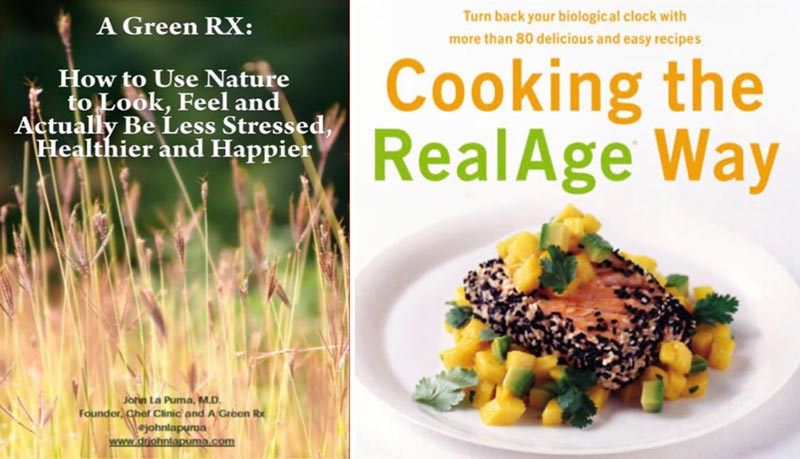
    Even bigger money? Small lifestyle changes that let you avoid the need for medication, or reduce your dependence on it. But then, that’s what ChefMD and is about. And so are Medifocus books on diabetes, high cholesterol, and reflux.

    Medication samples are ostensibly for checking side effects before investing in a full prescription.

    But in practice they are often used for people who cannot afford any medicine. And when they run out (only new meds are usually sampled), the medically indigent are out of luck.

    Fortunately, these sites are patient assistance programs:

    • needymeds.com (brand name and generic discounts)
    • rxassist.org (many options)
    • pparx.com (brand names)
    • rxhope.com (online apps)
    • togetherrxaccess.com (brand name and generic discounts)
    • accesstobenefits.org (Medicare beneficiaries)

    The latter site offers enrollment for Medicare Rx Extra Help, as does benefitscheckup.org.

    In addition, major pharma groups (AZ, GSK, Lilly, Merck and Pfizer) have medication discount programs: AZ, Merck and Pfizer’s programs cover all uninsured individuals; Lilly covers Medicare Part D individuals only; GSK has programs that cover both.

     
  • Sep7

    I am giving a talk in Las Vegas this Fall at the Medical Fusion Conference, and the organizers asked me to write a preview on how to write a New York Times best-seller.

    There are about 170,000 books published annually. For about 20 years, there have been three ways to write a New York Times Best-Seller:

    1. Ask and receive Oprah’s endorsement. On her TV show.
    2. Send your book to Gayle or Stedman, and hope one or both tell Oprah about it, and she likes it (see #1 above)
    3. Have your book made into a widely released and popular film

    (On September 1, while giving a farmer’s market tour for Jillian Michaels’ Grand Prize winner, I met an organic gardener who is banking on #2, and who told me my browning Calamondin was too wet. Hmmm. He might be right).

    I have two books which have made it on to the list: my co-author on The RealAge Diet, Dr Mike Roizen, has been on Oprah! 22 times and is a media and medical star. That’s one.

    The second, ChefMD’s Big Book of Culinary Medicine, is still awaiting Oprah’s interest. Somehow I managed to get on the list without it: no one thought I could. I plan to do it again.

    I did it with

  • good radio/television/interview skills
  • a good e-mail list with ChefMD
  • a deliberate press kit and 9 month ahead planning
  • saying “yes” to every invitation
  • relentless editing, and
  • truly novel and practical content, presented to my core demographic in the language and tone that they want to hear (and happens to be exactly who I am).
  • In other works, skill, timing, hard work and luck.

    Which leads me to two new ways to attempt and achieve this feat. What is changing is that authors are beginning to communicate with their readers directly.

    The two new ways are:

    1. Connect with and build a Twitter following, Email subscriber list or Facebook fan page with a following of over 100,000…on your subject and passion, not about your book.
    2. Claim your part of infinite shelf and storage-space created by Amazon, Ipad, Kindle and others by understanding and faceting your creation for these distributors.

    In past decades, publishers held the key to the readership kingdom. Authors toiled, editors edited, publishers published and took risk. Distributors distributed, promoters promoted.

    Each of those roles is now different in important ways. Popular authors craft more than write; editors package books, and seldom actually edit (agents sometimes do that now); publishers, well, are dying off.

    Unless you count blogger, wordpress and you. You’re now a publisher. You can be a distributor. And you have to be a promoter, but in a kinder, more transparent, even more helpful way than promoters past.

    By taking back the relationship with readers, authors are building their own constituencies, and thus, preparing their audiences for the next Great American novella or nonfiction, whether Kindle, iPad, pdf download, hardcover or soft.

    It’s paradoxical that old media–like the New York Times, which along with the Wall Street Journal I still try to read everyday, often online–still give the biggest bang for your PR buck. And once you’re in, you’re in forever.

    Seth Godin, a New York Times #1 best-selling author 12 times over, maintains that publishing as we know it is fundamentally broken. It might be.

    But that won’t stop millions of writers of wanting to be New York Times best-selling authors too. And they should. Because it’s a goal worth achieving. And you can do it if you know how.

    Here’s the book promo video: I had terrific help in making this: